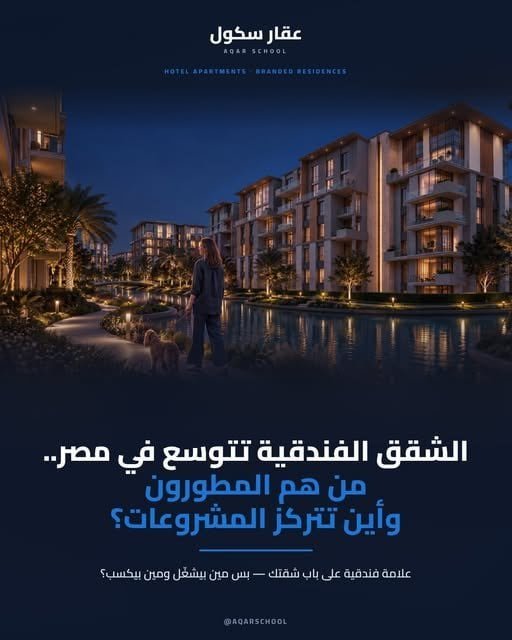
If you are buying a hotel apartment in Egypt — or you already own one — the question is no longer whether to use a management operator, it’s which one. A 12 October 2026 Aqarschool industry analysis confirmed what MAMO Property has seen on the ground in Hurghada and the Red Sea: the asset class has moved from niche to mainstream, and the operators that win will be the ones who combine disciplined revenue management with transparent owner reporting.
This guide is written for owners of hotel apartments, investors considering the segment, and short-stay operators sizing up Egypt’s Red Sea as a managed-rental market. We will cover the four operator archetypes active in Egypt in 2026 (international brand, regional chain, developer captive, independent local), the five operating questions owners should answer before signing any agreement, an honest read on the risks from the brand side, and how MAMO Property fits into the picture — as one of the independent operators that manages short-stay inventory across Hurghada, Sahl Hasheesh, El Gouna, Magawish, and Makadi.
Why the hotel-apartment operator question matters more than the developer question
Buyers naturally focus on developer, location, and unit price. Aqarschool’s analysis is explicit on the priority inversion: “the management contract is more important than the sales contract”. A developer can sell you a prime unit in a great location; if the operator fails on revenue management, distribution, or maintenance, the same unit produces 1-2% yield instead of the 6-9% the room-rate math suggests. We see this on Hurghada managed units every season — the gap between top-quartile and bottom-quartile operator performance on identical buildings routinely runs 4-6 percentage points of net yield.
The model is also relevant for conventional holiday-rental owners in Hurghada, not only for new branded-hotel apartment buyers. If you own a one-bedroom in El Ahyaa or Magawish and you list it on Airbnb, Booking.com, and Agoda, you are effectively running an independent aparthotel operation. The same operator evaluation criteria apply — you simply default to yourself as the operator.
Four operator archetypes in Egypt in 2026
From the Aqarschool analysis and MAMO Property’s own market observation, four operator models are active in 2026. Each has different economics, different strengths, and different points of failure.
Archetype 1 — International brand operator (Marriott, Hilton, InterContinental, Sheraton)
These operators run the highest ADRs in their segment because they carry global brand recognition, in-house revenue management, and corporate distribution through the GDS (Amadeus, Sabre, Travelport). Marriott’s Egypt footprint, expanded through its Misr Italia partnership, anchors the upper end of the market. Hilton has a smaller Egypt footprint and concentrates on New Cairo tower-deliveries. InterContinental’s role is mostly ultra-premium towers in Cairo and on the North Coast.
Strengths: predictable ADR ceiling, deep loyalty-program demand (Marriott Bonvoy has 200+ million members), brand-standard maintenance cycles, audited financial reporting.
Weaknesses: management fees of 25-35% of gross revenue, mandatory FF&E (furniture, fixtures and equipment) reserve of 3-5%, restrictions on owner use during peak season, and disputes over revenue allocation when the operator benchmarks to last year’s low season to protect its fee base.
Archetype 2 — Regional chain (Steigenberger, Movenpick, City Stars, Triumph)
Middle-market operators focused on the 4-star and 5-star-lite segment. Lower brand pull than the internationals but materially lower fees (typically 18-25%). Strong on F&B, spa, and meeting-catering revenue, weaker on direct digital distribution. Good fit for buyers who want brand-standard presentation without paying the international-brand tax.
Archetype 3 — Developer captive operator
When the developer owns the management company (or has a long-term captive agreement), the operator is incentivised to push unit sales rather than to optimise rental yield. This is the single biggest source of yield compression in Egypt’s hotel-apartment segment today. The investor often does not see the conflict because the sales pitch and the operations deck are owned by the same entity. Two protective questions always apply:
- Is the operator a subsidiary of the developer? Look up the legal entity on the Egyptian Investment Ministry’s commercial registry.
- Does the operator’s fee structure reward rental yield (preferred) or unit absorption (red flag)?
Archetype 4 — Independent local operator (MAMO Property, Hurghada local management firms)
Independent operators like MAMO Property run Hurghada and Red Sea managed-rental inventory where no formal brand-management agreement exists, or where the owner prefers a transparent local operator over a developer captive. Our 17 managed units across Al Ahyaa, Magawish, Sahl Hasheesh, and El Kawther produced an average 27% blended occupancy in 2025 across Booking.com, Airbnb, Agoda, and direct channels, with full monthly owner statements and a 22% all-in management fee (lower than the international brands).
Strengths: full transparency, faster maintenance response, lower fees, no captive conflict.
Weaknesses: no global distribution network, weaker negotiating position with OTAs (Booking.com, Airbnb), smaller FF&E reserve, no formal brand standard for refurbishment cycles. Owners who want the international brand experience should not use an independent; owners who want control and yield transparency often prefer one.
The five operating questions to ask any operator
Adapted from the Aqarschool pre-flight checklist and refined for the Hurghada / Red Sea market. Use these five questions at every operator pitch meeting.
- Who is the legal entity you will be contracting with? Get the full commercial-registration number. Cross-check it on the Egyptian Investment Ministry’s registry. If the operator is a subsidiary of the developer, treat that as a structural risk and price it into your yield model (assume 1.5-2.0 points of compression).
- What is the duration and renewal structure of the management agreement? Five years with two 5-year renewals is the market standard for international brands. Anything shorter exposes you to operator turnover risk, which is the single largest cause of yield compression in this segment.
- How is the rental split calculated, and what are the all-in deductions? The headline 70/30 split quoted in the sales brochure is usually the gross split before fees. You need to know: management fee %, FF&E reserve %, OTA distribution cost %, tourist-establishment tax %, and the formula for handling low-season inventory discounts.
- Can you share 12 months of audited monthly statements from a comparable unit in the same sub-market? Refuse generic projections. Real audited statements from the operator’s performance on a comparable building are your strongest signal.
- What are your rights as an owner? Free-night allotment (typically 14-30 nights/year), notice period, right to audit, right to remove the unit from the rental pool during owner-occupancy periods, and resale mechanics. Get all five in writing.
Five pitfalls the marketing brochures leave out
Across the Aqarschool analysis and our own internal data from 17 managed Hurghada units, five pitfalls consistently appear in pitch decks:
- Revenue-management exposure. The operator sets your ADR daily. If the operator benchmarks to last year’s lows to protect its 25% fee, your yield compresses by 200-300 basis points. Demand audited monthly statements, not annual.
- Hidden OTA markup. Booking.com and Airbnb take 15-22% commission on the operator’s side. International operators often pass that to the owner with an additional 4-6% “digital distribution” fee. The result is a 25% effective OTA cost instead of the 18% the brochure describes.
- Peak-season blackout on owner use. Most contracts allow the operator to block owner use during peak windows (15 July – 31 August, Eid weeks, year-end). If your free-night allotment is in writing and transferrable across years, this is workable. If it is verbal, you will end up paying rack-rate for your own unit.
- Tourist-establishment tax shift. Egypt’s tourist-establishment regime taxes furnished coastal rental at 12% federal plus a governorate levy. Confirm whether the operator pays the tax and recovers it from the owner pool, or whether the operator absorbs it inside its 25% fee. Same headline, very different net yield.
- Refurbishment cycle surprise. International brand standards trigger mandatory refurbishment every 5-7 years: new furniture, new soft goods, sometimes new technology systems. Budget for 800,000 – 1,500,000 EGP every refurbishment cycle on a one-bedroom. Insist on a copy of the brand standard refurbishment schedule before signing.
Hurghada and the Red Sea: how this market behaves differently
MAMO Property’s home market is Hurghada, where the hotel-apartment model has been operating informally for two decades through unit-level Airbnb rentals and a small number of formal management firms. Three structural differences between Hurghada and the North Coast / New Cairo branded market are worth knowing:
- Lower ADR ceiling, higher occupancy ceiling. Hurghada’s peak-season ADR sits at 4,500-6,500 EGP/night vs. North Coast’s 9,000-14,000, but Hurghada’s blended occupancy runs 30-50% vs. North Coast’s 35-45%. Net yield lands in a similar band because Hurghada operates every week of the year, not just a 16-week peak season.
- Smarter unit price. Hurghada hotel apartments and managed units price from 1.6-3.5 million EGP for studios and 4-9 million EGP for one-bedrooms, vs. North Coast’s 12-30 million EGP band. Barrier to entry is much lower for Egyptian and GCC family buyers.
- All-inclusive resort competition. Hurghada competes against deep all-inclusive inventory (Sunrise, Pickalbatros, Albatros, Rixos, Sentido, Hawaii). That competition compresses hotel-apartment ADRs vs. branded resort ADRs by 15-20%, and it forces operators to differentiate on location, view, and service quality rather than on brand alone. The independent-operator archetype (MAMO Property included) competes well in this submarket because differentiation is operational rather than brand-driven.
How MAMO Property manages hotel apartments in Hurghada
MAMO Property manages 17 hotel apartments across HRG currently, with the bulk of inventory in Al Ahyaa (5 units), Magawish (4 units), Sahl Hasheesh (3 units), El Kawther (3 units), and a small test portfolio in El Gouna and Makadi (2 units combined). Three working principles drive our operating model:
- Transparent owner reporting. Monthly PDF statements showing gross room revenue by channel, deductions line by line, taxes by category, and net owner payout in EGP and at the prevailing USD rate. Owners receive a copy of every booking confirmation and every OTA statement.
- Direct-OTA mix. We work with Booking.com, Airbnb, Agoda, and a small direct-booking site that we run on the MAMO Property website. The mix runs 45% Booking, 28% Airbnb, 12% Agoda, 15% direct. Direct reservations carry the lowest channel cost (3% payment processing vs. 18-22% OTA commission).
- FF&E discipline. We replace soft goods (linen, towels, cushions) every 18 months and inspect furniture every 6 months. Hard refurbishment cycles run every 5 years. We share the schedule with the owner and split refurbishment cost 50/50 with the owner up to a 200,000 EGP cap per cycle.
If you already own a unit and want a managed-rental consultation, or if you want an independent review of an operator’s contract before you sign, our investor team is available for a 30-minute call. Reach us on WhatsApp at +20 115 298 0998, browse current managed inventory at rent.mamoproperty.com, or read our companion guide to Hurghada rental yield for the operating math.
Frequently asked questions
How is the management agreement signed if I am a foreign buyer?
The agreement is signed at the same time as the title-deed transfer, normally inside the developer’s sales office or your lawyer’s office. The contract is filed with the notary, and both signatures are kept on file with the property registry. A foreign buyer signs under the same legal regime as an Egyptian buyer — there is no requirement for an Egyptian-resident power of attorney.
What is the typical ramp-up period before my unit produces real yield?
Brand-managed inventory at a known hotel property produces yield from day one, typically inside a 14-day onboarding. Independent operators require a 30-60 day ramp for photography, OTA listing, channel manager integration, and pricing calibration. Expect 40-60% of steady-state yield in month one, ramping to 90% by month three.
Can I use the management firm my developer recommends?
Yes, but get the agreement reviewed by an independent real-estate lawyer before signature. The single most common avoidable loss in this segment is signing a developer-captive agreement that has 30-day termination clauses, 35% management fees, and no audited reporting obligations.
How does MAMO Property charge?
22% all-in management fee (vs. 25-35% at international brand operators). The fee covers OTA distribution, revenue management, housekeeping coordination, FF&E reserve, owner reporting, and guest communication. There are no setup fees, no monthly minimums, and no long-term lock-in (we use 12-month rolling agreements with 30-day notice).
Can I switch operators?
Yes. The management agreement is between you and the operator, not attached to the unit title. Most contracts allow termination on 30-90 days’ notice. We assist with the transition: removing your unit from the previous operator’s listings, transferring OTA accounts, and migrating guest reviews where possible.
Next steps and further reading
This guide pairs with the branded hotel apartments investor guide on MAMO Property’s main site, which covers developer selection, ROI worked example, and the five pre-flight questions to ask the developer. The two articles together give you the buy-side and the operate-side of the same decision. Both are updated quarterly as the market evolves.
Related guides
- Branded hotel apartments Egypt 2026 — investor guide
- Hurghada rental yield calculator 2026
- Airbnb management Hurghada — full operating playbook
- Sahl Hasheesh premium property investment
- Al Ahyaa Hurghada buyer’s guide
- Red Sea real estate investment 2026
Hurghada Hotel Apartments & Vacation Rentals
Turn your Hurghada research into a real stay. Compare direct-booking apartments, studios and villas with MAMO Property.
Suggested unit: Luxury 55m² Pool View Studio with Private Balcony | HRG Hurghada Hotel Apartments
Get a direct rental offer
Tell us your dates and budget. We will recommend the best available Hurghada stay and reply on WhatsApp.